Holly Plant Christmas Card Illustrations for Design
I recently received a brief from a boutique client launching a limited-edition holiday gift set. They wanted something that felt nostalgic yet fresh, avoiding the generic clipart look that plagues so many seasonal campaigns. The goal was to create a cohesive visual identity for their packaging, social media graphics, and digital marketing materials. While scanning through various design assets, I immediately gravitated toward the Holly Plant Christmas Card. As a professional who works with brand identity and marketing visuals daily, I needed to determine if this piece could stand up to real-world application or if it was merely decorative fluff.
The First Impression: Mood and Style
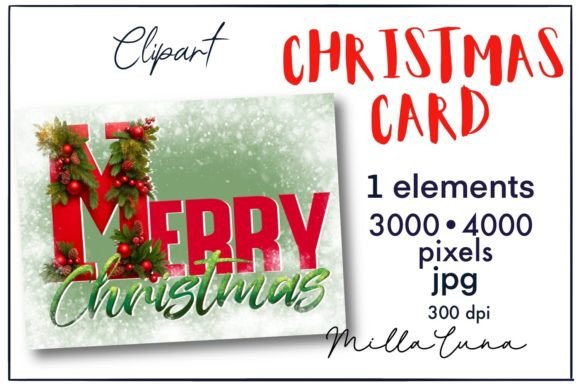
Upon first glance, the Holly Plant Christmas Card strikes a perfect balance between traditional charm and modern polish. It does not feel like a dusty vector from the early 2000s; instead, it carries a refined aesthetic that suggests high-quality illustrations. The color palette is rich and saturated, capturing the deep greens of winter foliage and the vibrant reds of berries without appearing garish. This creates an immediate sense of warmth and festive cheer, which is exactly what a handmade business needs to convey to its audience.
The style leans towards a contemporary hand-drawn feel, making it versatile enough for small business branding while retaining the elegance required for corporate holiday cards. For a client selling artisanal goods, this asset offers the "handmade" vibe that customers crave on platforms like Etsy. It feels authentic rather than mass-produced, a crucial distinction when building trust with consumers.
Real-World Application in Client Projects
In my workflow, versatility is key. A single asset must often serve multiple purposes across different mediums. The Holly Plant Christmas Card proves its worth immediately as a central element in packaging design. Imagine this illustration embossed on a kraft paper box or printed on a glossy sticker for a candle jar. The detail holds up well, suggesting that it can be scaled without losing integrity.
Beyond physical products, this asset shines in digital design. It serves as an excellent hero graphic for a website banner during the holiday season or as a dynamic background for a Pinterest pin. When used in social media graphics, the composition allows space for text overlays without cluttering the visual hierarchy. I also envision using it in Cricut projects for creating custom vinyl decals on mugs or tote bags. The clean lines make it ideal for sublimation design, ensuring crisp edges when transferred onto fabric or ceramics.
Where the Asset Excels
- Large Layout Areas: It commands attention as a primary visual anchor in posters, flyers, and email headers.
- Decorative Accents: Smaller versions work beautifully as borders for invitations or corner elements on printable wall art.
- Themed Collections: It fits seamlessly into a broader set of seasonal design assets, creating a unified look across a product line.
- Product Mockups: Placing this on a mockup instantly elevates the perceived value of a digital product or physical good.
Navigating Limitations and Best Practices
No asset is universally perfect, and a critical designer knows where to exercise caution. The Holly Plant Christmas Card should be approached carefully in minimalist branding contexts. If a client requires stark, ultra-clean corporate materials with heavy negative space, this detailed illustration might feel too busy. Similarly, in crowded layouts where text density is high, the visual weight of the holly could compete with your message rather than support it.
Readability remains a top priority. When integrating this into a logo design or web design project, ensure there is sufficient contrast. I recommend testing the asset in black and white to verify that the form translates well without relying solely on color. If you are placing it on a dark background, check that the highlights remain visible. Conversely, on light backgrounds, ensure the darker green tones provide enough depth to avoid fading into the canvas.
Technical Considerations for Commercial Use
Before finalizing any client deliverables, I always run a technical checklist. For the Holly Plant Christmas Card, file format is paramount. Is it available as a scalable SVG design? Vector files are non-negotiable for t-shirt design and large-format printing, as they allow for infinite scaling without pixelation. If only a PNG design is provided, inspect the transparency closely. Are the edges jagged? Is the resolution high enough for print-on-demand workflows?
Another vital step is comparing typography. This illustration has a distinct character, so pairing it with the wrong font can ruin the composition. A serif font might complement the classic feel, while a script font could enhance the handwritten aesthetic. Avoid pairing it with overly geometric sans serif fonts unless you are aiming for a specific, perhaps ironic, modern contrast. Always preview the combination at small sizes to ensure legibility.
Essential Designer Notes
- Licensing Verification: Confirm the commercial license explicitly covers the intended use, especially for resale items like Etsy products or print-on-demand stores.
- Mockup Testing: Place the asset on real-world mockups, such as a coffee mug or a greeting card envelope, to gauge scale and impact.
- Contrast Checks: Preview the image on both light and dark backgrounds to ensure it remains distinct.
- Format Inspection: Review the file properties to confirm editability and resolution suitability for your specific output device.
Final Verdict on Creative Potential
The Holly Plant Christmas Card is more than just a seasonal decoration; it is a robust graphic design asset capable of elevating a brand's visual narrative. Whether you are crafting a Canva template for clients, designing a sticker design for a local shop, or curating a design bundle for a creative marketplace, this illustration delivers. It bridges the gap between professional polish and artistic charm, making it a valuable addition to any designer's toolkit.
For those seeking to enhance their editorial design or create engaging marketing visuals for the holidays, this piece offers a reliable foundation. By understanding its strengths and respecting its limitations, designers can leverage the Holly Plant Christmas Card to create memorable, cohesive, and commercially viable projects. It stands out as a testament to how the right illustrations can transform a simple concept into a compelling brand story.