Christmas Cat Set 2: A Designer's Real-World Embroidery Review
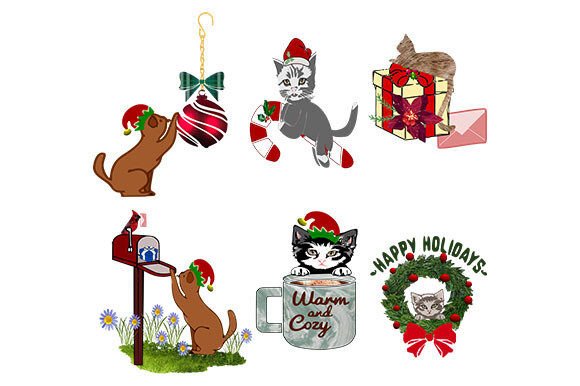
When I first opened the folder for Christmas Cat Set 2, my initial reaction wasn't about stitch counts or file formats. It was about the mood. As someone who has spent years refining designs for client projects and crafting items for my own small shop, I know that a successful embroidery design needs to do more than just fit in a hoop; it needs to tell a story immediately. This collection of Illustrations captures a specific kind of holiday charm that feels cozy rather than chaotic. The visual personality is distinct, blending festive elements with the playful nature of feline subjects in a way that suggests warmth and humor.
In the world of handmade goods, where customers are increasingly discerning about quality and aesthetic consistency, the difference between a generic clip-art look and a professionally digitized piece often comes down to how well the design translates from screen to fabric. My goal here is not to simply describe what the design looks like on a monitor, but to evaluate how Christmas Cat Set 2 performs when it is actually stitched into a finished product. Whether you are an Etsy seller preparing inventory for the holiday rush or a hobbyist looking to create a personalized gift for a family member, understanding the practical implications of this design is crucial.
The First Stitch: Visual Impact and Project Fit
The immediate appeal of Christmas Cat Set 2 lies in its balance of detail and readability. In many commercial embroidery projects, designers struggle to find that sweet spot where intricate details remain visible without becoming muddy after stitching. This set seems to navigate that challenge well. The shapes are defined enough to hold their form even on textured fabrics, which is a common hurdle for embroiderers working with towels or heavy cottons.
I envision this design naturally belonging in a few specific categories of embroidery project work. It feels perfectly at home on a custom embroidered tote bag, where the whimsical nature of the cats adds a touch of personality to a utilitarian item. Similarly, it would make a standout feature on a sweatshirt or a baby onesie. The layout allows for the design to be centered effectively, creating a focal point that draws the eye without overwhelming the garment. For those looking to create holiday embroidery gifts, the theme strikes a chord that appeals to both cat lovers and those who appreciate traditional Christmas aesthetics.
However, the transition from digital preview to physical reality requires careful consideration. When I reviewed the design assets, I noted that the density of the stitches appears optimized for medium-sized applications. This means that while it might look crisp on a large pillow cover, smaller applications require a different approach. The design possesses a certain "handmade" integrity that elevates the perceived value of the final product. Customers buying personalized gifts or boutique products are often willing to pay a premium for items that feel thoughtfully designed rather than mass-produced, and this set delivers that impression.
Real-World Application: From Scrap Fabric to Shop Floor
To truly understand the potential of Christmas Cat Set 2, let's walk through a realistic scenario. Imagine you are preparing a batch of aprons for a local craft fair or a boutique clothing line. You decide to use this design as the main feature on the chest area of a canvas apron. The texture of the canvas provides a nice backdrop, allowing the thread colors to pop. If you have selected the right thread colors—perhaps deep reds, forest greens, and warm golds—the design will stand out beautifully against the neutral fabric.
Now, consider a different application: a baby item. Embroidering on baby clothes requires a gentler touch and a focus on softness. If Christmas Cat Set 2 utilizes too much dense fill stitch, it could potentially feel stiff against a baby's skin. This is where the designer's judgment comes into play. Before committing to a production run of custom apparel, I would strongly advise testing the design on scrap fabric that mimics the intended final material. Check the stitch density to ensure it isn't so thick that it puckers the delicate knit of a onesie. The goal is to maintain the visual charm of the cats without compromising the comfort of the garment.
Another practical scenario involves creating embroidered patches. If you plan to sell these as accessories or add them to hats and bags, the stability of the design is key. Patches need to withstand movement and friction. The edges of the design must be clean, and the satin stitch borders (if present) must be tight enough to prevent fraying. If the design includes small details like whiskers or tiny bows, ensure they are robust enough to survive the trimming process required for patch creation. A machine embroidery design that looks good on a flat surface can sometimes fall apart if the structural integrity isn't sound.
Navigating Limitations: Where Caution is Required
No design is perfect for every situation, and being honest about limitations is part of professional design review. While Christmas Cat Set 2 is versatile, there are specific scenarios where you should exercise caution. Small hoop sizes present a significant challenge. If you attempt to scale this design down too much for a cap or a small pocket, the fine details may disappear entirely. The curves of the cats might become jagged, and any text or small accents could merge into a solid blob of thread.
Fabric choice also plays a pivotal role. Stretchy fabrics, such as jersey knits used for t-shirts, require careful stabilization. Without the proper stabilizer, the tension of the embroidery can cause the fabric to pucker, distorting the shape of the design. Similarly, dark fabrics demand high contrast. If your design relies on light-colored threads for subtle shading, it might get lost on a black background. Always test on the actual fabric color before running a full production batch.
Textured fabrics, like chenille or heavy fleece, can hide details that would otherwise be clear on smooth cotton. In these cases, the design might need to be simplified or the stitch count adjusted. Furthermore, if you are planning to wash the finished product frequently, such as with kitchen towels or baby blankets, ensure that the design is secure. Loose threads or areas with excessive density can lead to wear and tear over time, affecting the longevity of the finished product.
Practical Notes for the Discerning Maker
Before you start stitching, there are several technical steps that every experienced designer takes to ensure success. First, always test the design on a scrap piece of the exact fabric you intend to use. This helps you visualize how the thread colors interact with the material and whether the hoop size is appropriate for the placement. Second, inspect the small details closely. Zoom in on the digital file to see if any lines are too thin to stitch reliably. Third, check the stitch density. High-density areas can cause the fabric to bunch up, especially on thinner materials.
If you are selling these items, confirm the licensing terms clearly. Some digital embroidery files come with restrictions on commercial use, meaning you cannot sell the finished items without purchasing a specific license. Additionally, consider creating printable mockups to showcase the design to potential buyers. Seeing the design on a mockup can help you gauge customer interest before investing in materials. Finally, compare the design in black and white to ensure that the shapes hold up without relying solely on color contrast.
Christmas Cat Set 2 offers a delightful opportunity to create engaging, festive products that resonate with a wide audience. By approaching the design with a critical eye and understanding its strengths and weaknesses, you can produce high-quality items that build trust and loyalty among your customers. Whether you are crafting a single personalized gift or building a line of small shop products for the holiday season, this design has the potential to shine. Just remember, the magic of embroidery lies not just in the pattern, but in the care and precision brought to the machine. Test thoroughly, choose your materials wisely, and let the creativity flow.